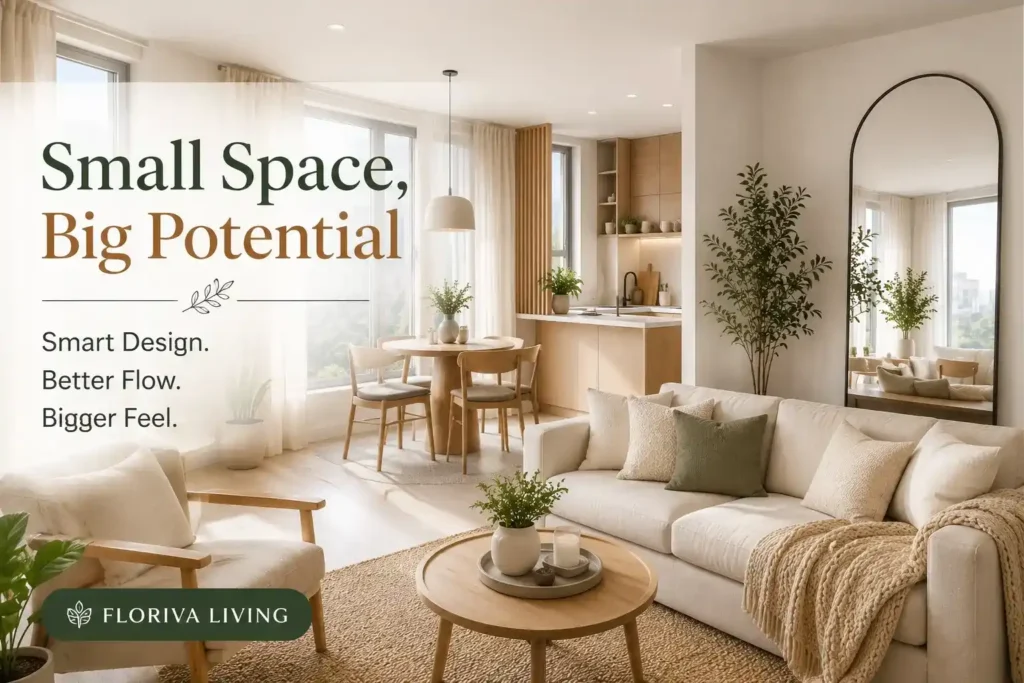
Living in a small apartment doesn’t mean you have to sacrifice style, comfort, or functionality. In fact, some of the most beautiful homes are compact spaces that have been thoughtfully designed. With the right decorating techniques, even the tiniest apartment can feel brighter, more spacious, and effortlessly inviting.
The secret isn’t having more square footage it’s making smarter design choices. From choosing furniture that works twice as hard to using light, color, and texture strategically, every detail contributes to creating a home that feels larger than it actually is. Whether you’re decorating your first apartment, upgrading a studio, or refreshing a cozy rental, these small apartment decorating ideas will help you create a home that feels stylish, organized, and uniquely yours.
The best small apartment decorating ideas focus on maximizing natural light, choosing multifunctional furniture, using vertical storage, keeping a cohesive color palette, minimizing clutter, and creating visual depth with mirrors and layered lighting. These simple design strategies make any apartment feel larger without requiring a major renovation.
Why Small Apartments Can Feel Surprisingly Spacious
A small apartment isn’t defined by its square footage it’s defined by how efficiently the space is used. Professional interior designers know that visual flow, lighting, furniture placement, and color selection have a much greater impact on how a room feels than its actual size.
Many homeowners unknowingly make their apartments feel cramped by overcrowding them with oversized furniture, dark colors, or excessive décor. By making a few intentional design changes, you can completely transform how your home looks and functions without increasing your budget.
The goal isn’t simply to fit more things into your apartment. Instead, it’s about creating balance between comfort, storage, and open space so every room feels welcoming rather than crowded.
1. Let Natural Light Become Your Best Design Feature
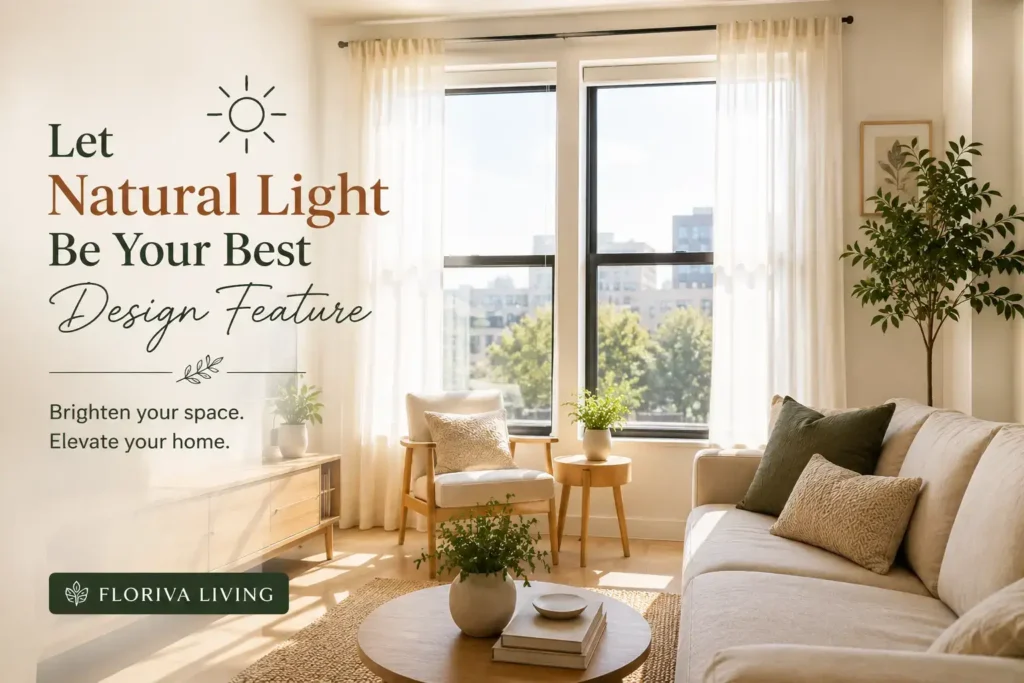
Natural light instantly makes any apartment appear larger and more open. If your windows are blocked by heavy curtains, bulky furniture, or dark décor, your rooms can quickly feel enclosed.
Choose sheer curtains that allow sunlight to filter through during the day while maintaining privacy. Position seating away from windows whenever possible so light can travel freely throughout the room. Even something as simple as regularly cleaning your windows can noticeably brighten your living space.
If your apartment doesn’t receive much sunlight, recreate the same effect with layered lighting using floor lamps, table lamps, and warm LED bulbs instead of relying on a single overhead fixture.
2. Use Mirrors to Create Instant Depth
Mirrors remain one of the most effective tricks interior designers use to visually expand small rooms. They reflect both natural and artificial light while creating the illusion of additional space.
A large floor mirror leaning against a wall instantly adds elegance while making a living room feel nearly twice as large. Placing a mirror opposite a window helps bounce daylight around the room, creating a brighter and more inviting atmosphere.
Decorative mirrors with thin black, brass, or wooden frames also double as artwork, adding personality without taking up valuable floor space.

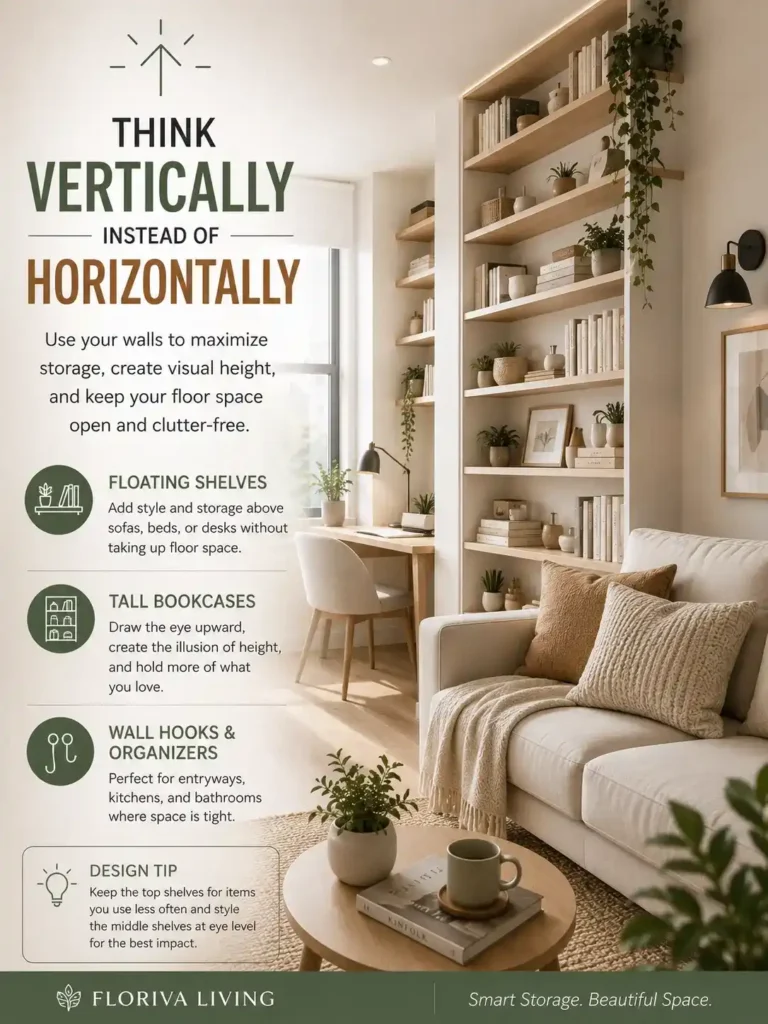
3. Think Vertically Instead of Horizontally
When floor space is limited, your walls become one of your home’s greatest assets. Vertical storage helps free up valuable walking space while making ceilings appear taller.
Floating shelves above sofas, beds, or desks provide room for books, artwork, candles, and decorative accessories without making the room feel cluttered. Tall bookcases that extend close to the ceiling naturally draw the eye upward, giving the illusion of height.
Wall-mounted hooks, pegboards, and hanging organizers are also practical additions for entryways, kitchens, and bathrooms where storage is often limited.
4. Choose Furniture That Does More Than One Job
Every piece of furniture should earn its place in a small apartment. Multifunctional furniture allows you to maximize both comfort and storage without overcrowding the room.
A storage ottoman can serve as extra seating, a coffee table, and hidden storage for blankets. A platform bed with built-in drawers eliminates the need for a bulky dresser, while nesting tables provide flexible surfaces that can be tucked away when not in use.
When shopping, ask yourself whether each item serves at least two purposes. If it doesn’t, consider a more versatile alternative.

5. Stick to a Soft, Cohesive Color Palette
Color plays a significant role in how spacious a room feels. Light shades reflect more light, helping walls appear farther apart and ceilings feel higher.
Warm whites, creamy beiges, soft grays, greige, and muted sage greens create an airy backdrop that works beautifully with almost any decorating style. Rather than introducing multiple bold colors, maintain consistency throughout your apartment to create visual flow from one room to another.
Accent colors can still be introduced through throw pillows, artwork, rugs, and decorative accessories without overwhelming the space.

6. Hide Clutter with Smart Storage
Visible clutter is one of the fastest ways to make a small apartment feel cramped. Investing in hidden storage solutions allows your home to remain organized while maintaining a clean and relaxing appearance.
Storage benches, decorative baskets, under-bed organizers, and cabinets with concealed compartments keep everyday essentials out of sight without sacrificing accessibility.
The more surfaces you keep clear, the more spacious your apartment will naturally feel.

7. Define Different Living Areas with Rugs
Open-concept apartments and studio layouts often lack natural room divisions. Area rugs solve this problem by visually separating spaces without adding physical walls.
A generously sized rug beneath your sofa anchors the living area, while another rug beneath a dining table establishes a dedicated eating space. This subtle zoning technique helps apartments feel more organized and thoughtfully designed.
Choosing rugs with soft textures and neutral tones also contributes to a warmer, more comfortable atmosphere.
8. Hang Curtains Higher Than the Windows
One of the oldest designer tricks is installing curtain rods several inches above the window frame. This simple adjustment creates the illusion of taller ceilings and larger windows.
Floor-length curtains further enhance the effect by drawing the eye upward and adding elegance. Lightweight linen or sheer fabrics work especially well because they maintain brightness while softening the room.
9. Keep Decorations Intentional
Minimalism doesn’t mean removing every decorative item from your home. Instead, it encourages selecting pieces that truly add value and personality.
A carefully styled coffee table with a candle, a small plant, and a decorative book often looks far more sophisticated than multiple random accessories competing for attention.
Leaving empty space between decorative items allows each piece to stand out while preventing visual clutter.
10. Bring Nature Indoors
Plants instantly make apartments feel fresher, calmer, and more inviting. Even a few carefully placed indoor plants can dramatically improve the atmosphere of your home.
Tall snake plants or fiddle-leaf figs add height to empty corners, while trailing pothos or ivy look beautiful on floating shelves. Small succulents brighten coffee tables and kitchen counters without requiring much maintenance.
If caring for plants isn’t your strength, realistic artificial greenery can achieve a similar visual effect.

11. Float Furniture Away from the Walls
Although many people believe pushing furniture against walls creates more space, it often has the opposite effect. Pulling a sofa or accent chair a few inches forward creates breathing room and adds depth to the layout.
This subtle adjustment helps rooms feel more intentionally designed while improving traffic flow throughout the apartment.
12. Decorate Walls Instead of Floors
Floor space is precious, so use your walls whenever possible. Artwork, floating shelves, decorative sconces, and wall-mounted storage keep the floor clear while adding personality.
Large statement artwork often creates a stronger visual impact than several smaller pieces, making the room appear less cluttered and more cohesive.
13. Layer Your Lighting
Lighting transforms how a room feels. Rather than relying solely on ceiling fixtures, combine ambient, task, and accent lighting throughout your apartment.
Floor lamps brighten dark corners, table lamps create cozy reading spaces, and LED strip lighting beneath cabinets adds subtle depth. Layered lighting makes even compact rooms feel luxurious and welcoming after sunset.
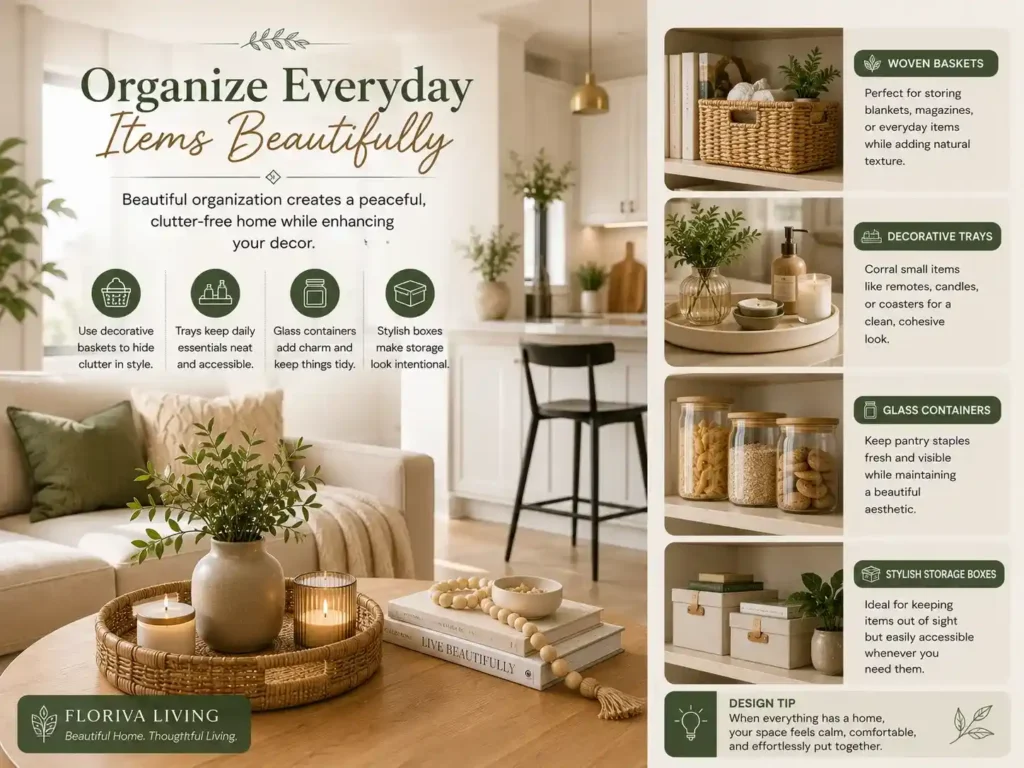
14. Organize Everyday Items Beautifully
Organization doesn’t have to look purely functional. Woven baskets, decorative trays, glass containers, and stylish storage boxes help keep essentials tidy while contributing to your overall décor.
Displaying frequently used items in attractive containers turns everyday necessities into part of your interior design rather than visual clutter.
15. Add Luxury Details Without Overspending
Luxury isn’t about expensive furniture—it’s about thoughtful styling. Soft throw blankets, textured cushions, elegant curtains, oversized artwork, and warm lighting instantly elevate an apartment’s appearance.
Replacing basic hardware with brass or matte black finishes, adding scented candles, and incorporating natural materials like wood, linen, and rattan creates a sophisticated look without requiring a complete makeover.
Best Furniture for Small Apartments
The most practical furniture combines style with functionality. Storage beds, extendable dining tables, nesting coffee tables, floating desks, compact sectionals, and storage ottomans all maximize usable space while keeping rooms comfortable.
Choosing furniture with exposed legs also creates a lighter appearance because more of the floor remains visible, making rooms feel larger.
Common Decorating Mistakes to Avoid
Many people unintentionally make their apartments feel smaller by purchasing oversized furniture or filling every available surface with decorations. Dark paint colors, poor lighting, tiny rugs, and bulky window treatments can also reduce the sense of openness.
Instead, focus on creating visual balance through thoughtful furniture placement, consistent colors, and carefully selected décor that enhances rather than overwhelms the space.
Expert Designer Tips
Professional designers often begin by decluttering before introducing new furniture or accessories. They also prioritize quality over quantity, investing in fewer pieces that serve multiple purposes and complement one another.
Maintaining clear walkways, using mirrors strategically, and repeating similar colors throughout the apartment creates a seamless flow that makes every room feel larger and more harmonious.
Quick Apartment Decorating Checklist
Before adding new décor, assess whether each item improves functionality or simply takes up space. Choose versatile furniture, maximize natural light, keep surfaces organized, and decorate with intention rather than excess.
Small improvements made consistently often create a greater transformation than one large renovation.
Conclusion
Decorating a small apartment is all about making thoughtful choices that balance beauty with practicality. By embracing natural light, using multifunctional furniture, maximizing vertical storage, and maintaining a cohesive color palette, you can create a home that feels significantly larger, brighter, and more inviting than its square footage suggests.
Remember, you don’t have to transform your apartment overnight. Start with one idea, build on your progress, and enjoy the process of creating a home that reflects your personality and lifestyle.
For more expert decorating guides, space-saving ideas, and inspiring interior design tips, explore the latest articles on Floriva Living and turn every corner of your home into a space you’ll love.