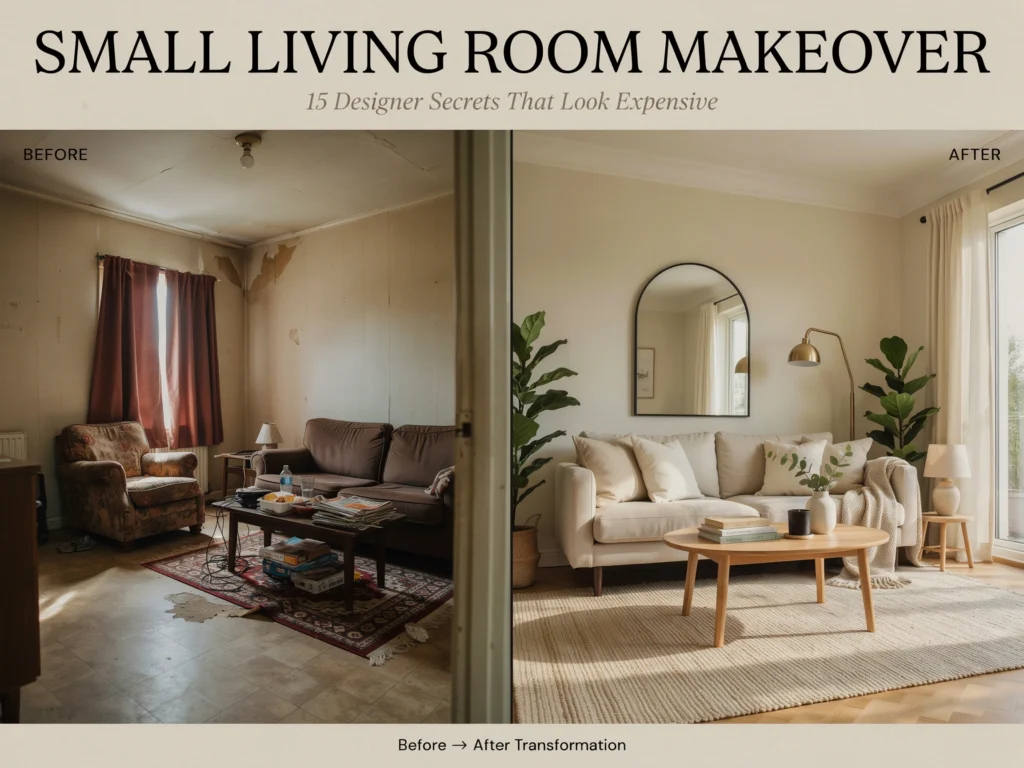
How do you makeover a small living room?
The easiest way to transform a small living room is by combining layered lighting, light-colored walls, properly sized furniture, oversized mirrors, floor-length curtains, textured fabrics, hidden storage, and thoughtful accessories. Together, these design techniques create the illusion of a larger, brighter, and more luxurious space without requiring a complete renovation.
What Is a Small Living Room Makeover?
A small living room makeover is the process of improving the appearance, comfort, and functionality of a compact living area through smart decorating techniques rather than structural changes. Instead of making the room physically larger, the goal is to maximize visual space, improve organization, and create a welcoming atmosphere using carefully selected furniture, lighting, colors, and accessories.
Why Small Living Rooms Have Big Design Potential
Many people see a small living room as a limitation, but experienced interior designers often see it as an opportunity. Smaller spaces naturally encourage thoughtful decorating because every item matters. Instead of filling empty corners with unnecessary furniture, you’re encouraged to focus on quality, functionality, and balance.
Large rooms often require more furniture and décor simply to avoid feeling empty. Smaller rooms, however, benefit from a minimalist approach where each piece contributes to the overall design. This intentional styling often results in a space that feels more elegant than larger rooms filled with unnecessary furniture.
A successful makeover also improves the way you live. Better lighting makes evenings more relaxing, hidden storage reduces clutter, and carefully arranged furniture creates smoother traffic flow. These small improvements add up to a living room that not only looks beautiful but also functions better every day.
1. Layer Your Lighting Instead of Relying on One Ceiling Fixture
Lighting is one of the most overlooked aspects of interior design, yet it has one of the greatest impacts on how a room feels. Many small living rooms rely entirely on a single overhead light, which often creates harsh shadows and makes the room feel flat and uninviting.
Professional designers almost never depend on one light source. Instead, they layer different types of lighting to create warmth and depth. Start with ambient lighting, such as a ceiling fixture or recessed lights, then add task lighting with a floor lamp beside your sofa or a table lamp on a side table. Finally, introduce accent lighting through wall sconces, candles, or LED strips to highlight artwork or shelving.
Warm white bulbs between 2700K and 3000K create a soft, welcoming glow that instantly makes a room feel cozier. Placing lights at different heights also helps eliminate dark corners, making the entire space appear larger and more balanced.
If your budget only allows for one update, upgrading your lighting is one of the most effective ways to elevate your small living room makeover.

2. Choose a Light and Cohesive Color Palette
Color influences how we perceive space. Light shades reflect natural light, while darker tones absorb it. This is why many beautifully designed small living rooms feature soft, neutral palettes rather than bold, contrasting colors.
Warm white, cream, beige, greige, soft gray, and sage green are excellent choices because they create an airy and timeless appearance. These colors also pair effortlessly with natural wood, brass, black accents, and textured fabrics.
Rather than using many different colors, limit your palette to three primary tones: a neutral base color, one accent color, and one complementary wood or metal finish. This creates visual harmony throughout the room while making it easier to select furniture and accessories.
That doesn’t mean your room has to feel boring. You can introduce personality through artwork, cushions, throws, and greenery while maintaining a calm, cohesive backdrop.

3. Add a Statement Accent Wall
Painting every wall in a dark color can overwhelm a compact space, but adding one carefully designed accent wall creates depth without making the room feel smaller.
An accent wall immediately becomes the room’s focal point, drawing attention away from the room’s limited dimensions. Popular options include forest green, deep navy, charcoal gray, textured wallpaper, limewash finishes, or decorative wood slats.
The wall behind your sofa or television is usually the best location because it naturally anchors the room. Pair the accent wall with simple artwork or floating shelves to complete the look without creating visual clutter.
This small change requires relatively little effort but can dramatically improve the character of your living room.

4. Use Mirrors to Create the Illusion of More Space
Mirrors are one of the oldest tricks in interior design, and for good reason. They reflect both natural and artificial light, making a room feel brighter while visually doubling the available space.
An oversized mirror positioned opposite a window reflects outdoor views and increases daylight throughout the room. If wall space is limited, a tall leaning mirror placed beside a console table can achieve the same effect while adding a relaxed, contemporary feel.
Round mirrors soften straight furniture lines, while rectangular mirrors emphasize ceiling height and create a stronger sense of depth.
Choosing a mirror with a slim metal or natural wood frame keeps the look elegant and prevents it from overpowering the room.

5. Choose Furniture with Exposed Legs
The furniture you choose has a significant impact on how spacious your living room feels. Large, bulky sofas and heavy wooden coffee tables can visually dominate a small space, making it appear even more cramped. Fortunately, there’s a simple design trick that interior designers use to create the illusion of openness choose furniture with exposed legs.
When the floor remains visible beneath sofas, chairs, and tables, your eyes naturally perceive the room as larger because the visual flow isn’t interrupted. Mid-century modern and Scandinavian furniture styles are excellent choices because they feature slim wooden or metal legs and clean, minimalist silhouettes.
If replacing your furniture isn’t an option, consider swapping out bulky coffee tables for glass or acrylic versions, which allow light to pass through and create an airy appearance. Nesting tables are another practical alternative because they provide extra surface space only when needed and tuck neatly away afterward.
The goal isn’t to fill every corner with furniture but to create breathing room. Even removing one oversized chair can dramatically improve the overall balance and circulation of your living room.

6. Invest in One Statement Piece Instead of Many Small Decorations
One of the most common decorating mistakes is purchasing dozens of inexpensive decorative accessories that compete for attention. While each item may seem attractive on its own, together they often create visual clutter that makes a small room feel busy and disorganized.
Professional designers follow a different philosophy: less, but better.
Instead of scattering small decorations throughout the room, choose one statement piece that immediately captures attention. This could be an oversized mirror, a large abstract painting, a designer-inspired area rug, a sculptural floor lamp, or an elegant accent chair. A single high-impact feature gives the room a clear focal point and creates a sense of sophistication that multiple smaller accessories rarely achieve.
Once your statement piece is in place, allow it room to breathe. Surround it with simple décor and neutral colors so it becomes the hero of the space. This approach not only creates a cleaner look but also makes your living room feel more intentional and professionally designed.
Remember, luxury interiors aren’t filled with more objects—they’re filled with better choices.

7. Use the Right Rug Size to Anchor the Room
Many homeowners unintentionally make their living room look smaller by choosing a rug that’s too small. A tiny rug floating beneath a coffee table visually breaks up the room and makes the furniture arrangement feel disconnected.
Instead, choose a rug that defines the entire seating area. Ideally, the front legs of your sofa and chairs should rest comfortably on the rug. This creates one unified conversation area that instantly makes the room appear larger and more cohesive.
Neutral rugs in wool, jute, or low-pile fabrics work particularly well because they add warmth without overwhelming the space. If your room already includes patterned furniture or artwork, opt for a simple rug that balances the design. Conversely, if your décor is fairly minimal, a subtle geometric or textured rug can add visual interest while maintaining harmony.
Sizing up is almost always the better choice. Although larger rugs may seem more expensive initially, they create a far more luxurious appearance and prevent the room from feeling fragmented.
8. Hang Curtains Higher and Wider
Curtains do much more than provide privacy—they also influence how tall and spacious a room feels. Unfortunately, many people install curtain rods directly above the window frame, which visually shortens the walls and makes the windows appear smaller.
Interior designers use a much more effective technique. Mount the curtain rod as close to the ceiling as possible and extend it several inches beyond both sides of the window. This simple adjustment tricks the eye into believing the windows are larger and the ceilings are higher than they actually are.
Floor-length curtains made from linen or lightweight cotton further enhance this effect by creating elegant vertical lines that naturally draw the eye upward. Neutral colors such as ivory, soft beige, or warm white allow natural light to bounce throughout the room, contributing to a brighter and more open atmosphere.
The transformation is often surprising. Something as simple as repositioning a curtain rod can make an ordinary apartment feel noticeably larger without spending hundreds of dollars.
9. Add Texture Instead of More Clutter
A beautifully designed living room doesn’t need countless decorative accessories—it needs layers of texture. Texture is what gives a room warmth, comfort, and personality without making it feel overcrowded.
Think about the difference between a plain sofa and one layered with a soft linen cushion, a chunky knit throw blanket, and a velvet accent pillow. These subtle combinations create depth and richness while maintaining a clean, uncluttered appearance.
Natural materials work especially well in small spaces. Woven baskets, wooden furniture, ceramic pottery, boucle fabrics, wool rugs, and rattan accents introduce variety while keeping the overall palette calm and cohesive.
Instead of filling every shelf with decorative objects, focus on mixing different textures throughout the room. This approach creates visual interest without sacrificing simplicity, making your small living room makeover feel cozy, sophisticated, and timeless.
10. Incorporate Hidden Storage for a Cleaner Living Room
Nothing makes a small living room feel cramped faster than visible clutter. Blankets tossed over chairs, remote controls on every surface, children’s toys, charging cables, and stacks of magazines quickly overwhelm even the most beautiful space.
The solution is incorporating hidden storage that blends seamlessly into your décor.
Storage ottomans are one of the most versatile pieces you can own. They provide extra seating, function as a footrest, and conceal blankets or seasonal decorations inside. Lift-top coffee tables offer hidden compartments for books and electronics while doubling as a workspace for laptops or meals.
Floating media consoles, built-in shelving, decorative baskets, and slim storage benches also help organize everyday essentials without adding bulky cabinets. By giving everything a designated place, you create a calmer environment that feels more spacious and easier to maintain.
Organization is one of the defining characteristics of luxury interiors. When surfaces remain clear and clutter stays hidden, the room immediately appears brighter, larger, and far more expensive than it actually is.
The most successful small living room makeover projects aren’t defined by expensive renovations they’re built on thoughtful decisions that improve both beauty and functionality. By selecting appropriately scaled furniture, introducing a strong focal point, choosing the right rug, maximizing window treatments, layering texture, and keeping clutter hidden, you’ll already notice a remarkable transformation in the way your living room looks and feels.
11. Style Your Coffee Table Like a Designer
A coffee table may seem like a small detail, but it often becomes the centerpiece of a living room. When styled thoughtfully, it can instantly make the entire space feel polished and professionally designed. On the other hand, a cluttered or completely empty coffee table can make the room look unfinished.
Interior designers often follow the Rule of Three, which creates balance and visual interest. Instead of covering every inch of the surface with decorative items, choose three carefully selected elements that vary in height, shape, and texture. For example, stack two or three beautiful coffee table books, place a scented candle or decorative tray on top, and finish the arrangement with a small ceramic vase or an indoor plant.
Layering objects in this way creates depth while maintaining a clean appearance. It’s also important to leave some empty space on the table. Negative space allows each decorative piece to stand out and keeps the table practical for everyday use. A beautifully styled coffee table doesn’t just enhance the furniture—it elevates the entire living room.
12. Bring Nature Indoors with Greenery
One of the easiest ways to make a living room feel fresh and welcoming is by introducing natural elements. Indoor plants soften hard furniture lines, improve the overall atmosphere, and add vibrant color without overwhelming the space. They also create a connection between your home and nature, making the room feel calmer and more relaxing.
If your living room receives plenty of natural light, consider larger plants like a fiddle leaf fig, monstera, or rubber plant. These statement plants instantly fill empty corners and bring life to the room. For lower-light spaces, snake plants, ZZ plants, pothos, and peace lilies are excellent low-maintenance choices that thrive with minimal care.
If you’re not confident caring for live plants, high-quality artificial greenery has become remarkably realistic. A well-made faux olive tree or eucalyptus arrangement can provide the same visual impact while requiring no maintenance. Whether real or artificial, greenery is an essential finishing touch for a successful small living room makeover because it introduces warmth, texture, and a sense of vitality.
13. Decorate Vertically to Maximize Every Inch
When floor space is limited, the walls become your greatest design opportunity. Decorating vertically draws the eye upward, making ceilings appear taller and creating the illusion of a larger room.
Floating shelves are one of the best ways to add both storage and style without taking up valuable floor space. They can display books, framed artwork, candles, or carefully selected decorative objects while maintaining a light and airy appearance. Similarly, tall bookcases and slim display cabinets make excellent use of vertical space while keeping the room organized.
Artwork also plays an important role. Instead of hanging several small frames scattered across the wall, choose one large statement piece or create a balanced gallery wall with consistent spacing. Floor-to-ceiling curtains further emphasize height and help the room feel more elegant.
The goal is not to fill every wall but to guide the eye upward through thoughtful design. This simple strategy creates a room that feels taller, brighter, and far more spacious than its actual dimensions.
14. Replace Bulky Furniture with Streamlined Pieces
Furniture can either enhance or limit a small living room. Oversized sofas, heavy wooden tables, and large entertainment units often dominate compact spaces, leaving little room for movement. Replacing these pieces with streamlined alternatives can dramatically improve both functionality and visual flow.
Look for apartment-sized sofas with slim arms, armless accent chairs, floating media consoles, and nesting tables that can be tucked away when not in use. Furniture with exposed legs allows more of the floor to remain visible, making the room feel open and airy. Glass coffee tables are another excellent option because they reflect light while taking up very little visual space.
Multifunctional furniture is particularly valuable in smaller homes. A storage bench can provide seating and organization, while a modular sofa can be rearranged to suit different occasions. Every furniture piece should contribute to both comfort and practicality, ensuring that your living room remains functional without feeling overcrowded.
15. Finish with Thoughtful Luxury Accessories
Accessories are the finishing touches that bring a room to life, but in a small living room, restraint is key. Instead of filling every shelf and tabletop with decorations, choose a few timeless pieces that complement your overall design.
A large piece of artwork, a sculptural table lamp, elegant brass candle holders, handmade pottery, or a marble tray can instantly elevate the room without creating visual clutter. Decorative books, woven baskets, and textured cushions also add personality while maintaining a sophisticated appearance.
One helpful styling principle is to remove one decorative item every time you introduce a new one. This habit prevents overcrowding and keeps your décor feeling intentional. Luxury interiors are rarely filled with countless objects; instead, they feature carefully curated collections that allow each piece to stand out.
When every accessory has a purpose and complements the overall design, your living room feels calm, elegant, and professionally styled.
Before vs. After Checklist
Before beginning your makeover, many small living rooms suffer from poor lighting, oversized furniture, mismatched colors, cluttered surfaces, and a lack of clear focal points. After applying the ideas in this guide, your space should feel brighter, more organized, and visually balanced.
Ask yourself these questions:
- Have I layered my lighting instead of relying on one ceiling fixture?
- Does my furniture fit the scale of the room?
- Is my rug large enough to anchor the seating area?
- Are my curtains hung close to the ceiling?
- Have I reduced clutter by using hidden storage?
- Do I have one clear statement piece?
- Have I added texture through fabrics and natural materials?
- Does the room include greenery?
- Is there enough empty space for the room to breathe?
If you answered “yes” to most of these questions, you’ve successfully transformed your living room into a stylish and functional space.
Common Small Living Room Decorating Mistakes
Even the most beautiful furniture can’t compensate for poor design choices. One of the biggest mistakes homeowners make is purchasing furniture that’s too large for the room. Oversized sofas and bulky coffee tables leave little room for movement and make the space feel crowded.
Another common error is choosing rugs that are too small. A rug should connect the seating area rather than float beneath the coffee table. Hanging curtains directly above the window frame instead of near the ceiling also makes the room appear shorter than it really is.
Too many decorative objects, poor lighting, and an inconsistent color palette can further contribute to visual clutter. Instead of trying to fill every empty space, focus on creating balance through thoughtful styling and intentional design.

Expert Designer Tips
Professional designers understand that simplicity often creates the greatest impact. They recommend limiting your color palette to three primary tones, layering several sources of warm lighting, and mixing natural textures such as wood, linen, wool, and ceramic.
Invest in one or two high-quality statement pieces instead of numerous inexpensive accessories. Leave breathing room between furniture, keep surfaces partially clear, and allow natural light to become one of your strongest design features.
Most importantly, decorate for the way you live. A beautiful living room should not only impress guests—it should also make you feel comfortable every time you walk into the space.
Conclusion
A successful small living room makeover isn’t measured by how much money you spend—it’s measured by how intentionally you design your space. Every improvement, from layered lighting and properly sized furniture to textured fabrics and carefully chosen accessories, contributes to a room that feels larger, brighter, and more welcoming.
The beauty of interior design lies in its ability to transform everyday spaces through thoughtful decisions rather than expensive renovations. You don’t need a larger home to enjoy a luxurious living room. By embracing simplicity, maximizing natural light, choosing furniture wisely, and decorating with purpose, even the smallest living room can become one of the most inviting spaces in your home.
Start with one or two ideas from this guide, enjoy the transformation, and gradually build a space that reflects your personality and lifestyle. Small changes truly can make a remarkable difference.
Discover More Decorating Inspiration at Floriva Living
Looking for more expert home décor ideas? Explore Floriva Living for stylish living room inspiration, clever organization solutions, seasonal decorating tips, DIY projects, and timeless interior design ideas that help you create a beautiful home you’ll love for years to come.