Designing a room for both a girl and a boy can be a fun opportunity to create a space that feels personal, balanced, and inviting for both children. The key is finding a style that doesn’t feel too feminine or masculine while giving each child a small area that reflects their personality.
From clever color combinations and matching furniture to individual storage and creative sleeping arrangements, these girl and boy shared bedroom design ideas can help you create a room that feels cohesive without making either child feel overlooked.
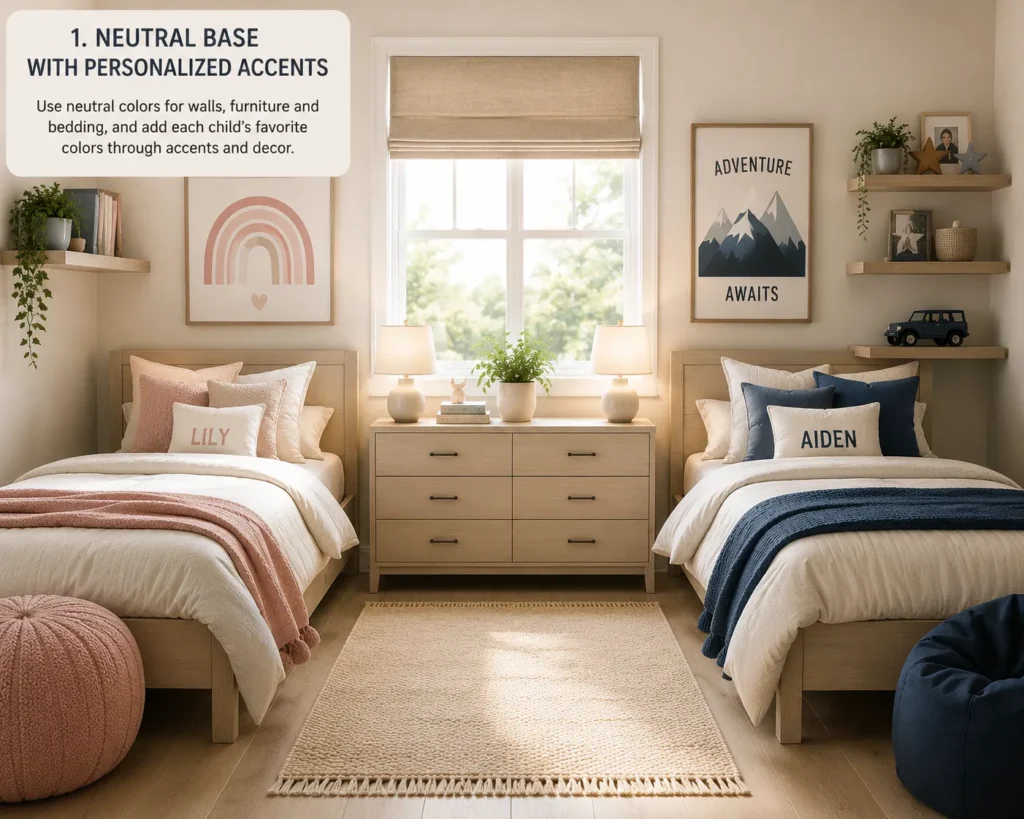
1. Use a Neutral Base with Personalized Accents
A neutral foundation is one of the easiest ways to create harmony in a shared bedroom. Start with cream, white, beige, soft gray, or light wood, then allow each child to introduce their favorite colors through smaller accessories.
Try:
- Cream or white walls
- Natural wood furniture
- Neutral bedding
- Soft blue accents
- Dusty pink or coral accents
- Personalized cushions
The neutral background keeps everything coordinated while colorful accessories give each child their own visual identity.
Best tip: Let each child choose two or three accent colors rather than decorating the entire room in separate themes.
2. Create Two Clearly Defined Personal Zones
Even when children share a bedroom, having a little personal territory can make the room feel much more comfortable. Divide the room visually rather than creating a harsh physical separation.
Place each child’s bed, bedside table, artwork, and storage on their own side.
Give each child:
- A personal bedside area
- Individual shelves
- Separate clothing storage
- Their own artwork
- A small display space
Matching furniture can keep the room cohesive while personalized décor makes each zone feel special.

3. Try Matching Beds with Different Bedding
Two matching beds can create a beautifully organized shared bedroom. Instead of making the bedding identical, use the same style with slightly different colors or patterns.
For example:
Girl’s side: Cream + dusty pink
Boy’s side: Cream + soft blue
Or choose a completely neutral palette and personalize each bed with different cushions, blankets, and artwork.
This approach gives both children individuality without making the room look divided.

4. Choose a Fun Bunk Bed Layout
A bunk bed can be a smart solution when floor space is limited. It leaves more room for playing, studying, and storage.
Choose a simple wooden or white bunk bed and let each child personalize their sleeping level.
Make it cozy with:
- Individual reading lights
- Personalized bedding
- Small storage pockets
- Favorite books
- Wall artwork
- Soft blankets
For younger children, make sure the bunk bed is age-appropriate and follow the manufacturer’s safety requirements.
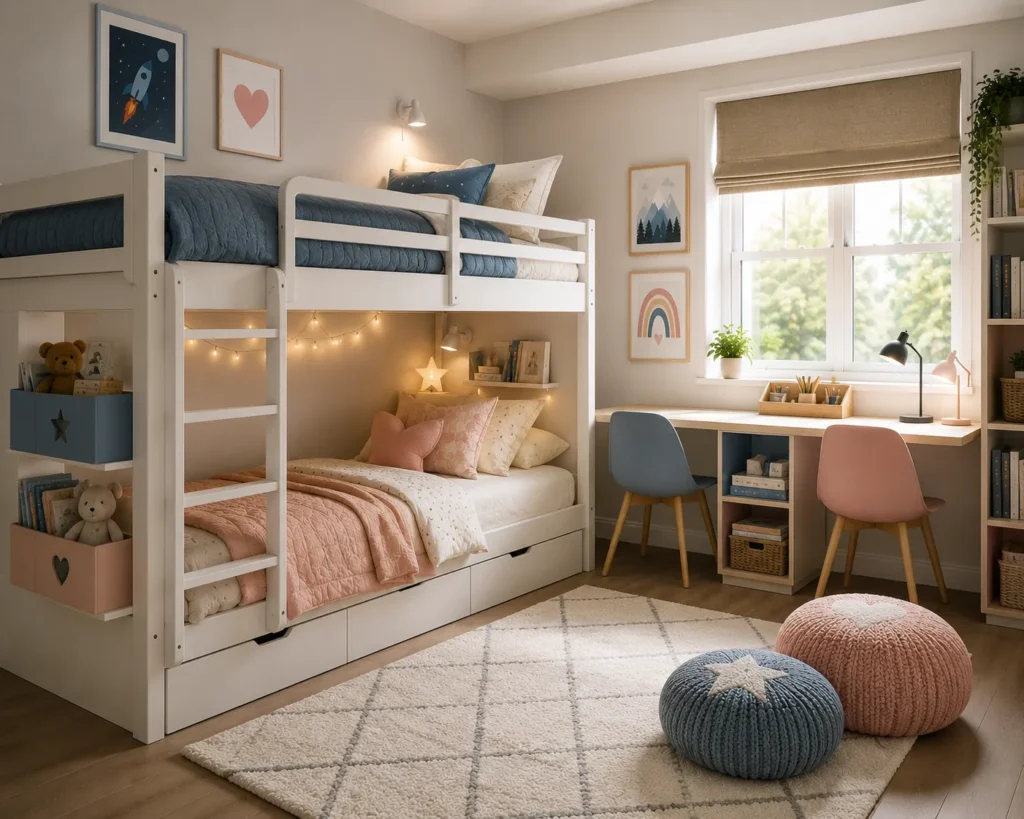
5. Combine Pink, Blue, and Warm Neutrals
Pink and blue don’t have to dominate the entire bedroom. Using them as small accents against a neutral backdrop creates a stylish and balanced result.
A beautiful palette could include:
- Warm white
- Beige
- Light oak
- Dusty pink
- Soft blue
- Sage green
Use pink and blue in cushions, bedding, artwork, rugs, or storage rather than painting separate walls.
This creates a modern look that can easily evolve as the children grow.
6. Design a Shared Study and Creative Corner
If the children are school-aged, a shared desk can turn an unused section of the room into a practical workspace.
A long wooden desk with two chairs gives both children equal working space while keeping the room visually connected.
Add:
- Two desk lamps
- Individual organizers
- Open shelving
- Pinboards
- Colorful stationery
- Comfortable chairs
Give each child a designated drawer or shelf so their belongings don’t constantly get mixed together.

7. Maximize Storage with Stylish Solutions
Shared bedrooms can become cluttered quickly, so smart storage is essential. Use every available area without making the room feel crowded.
Useful options include:
- Under-bed drawers
- Built-in wardrobes
- Wall-mounted shelves
- Storage benches
- Woven baskets
- Labeled bins
- Bedside organizers
Assigning separate storage spaces can also help children learn to organize and care for their belongings.
Extra idea: Use matching baskets but give each child a different label or symbol to make organization easy.
8. Create a Cozy Shared Theme
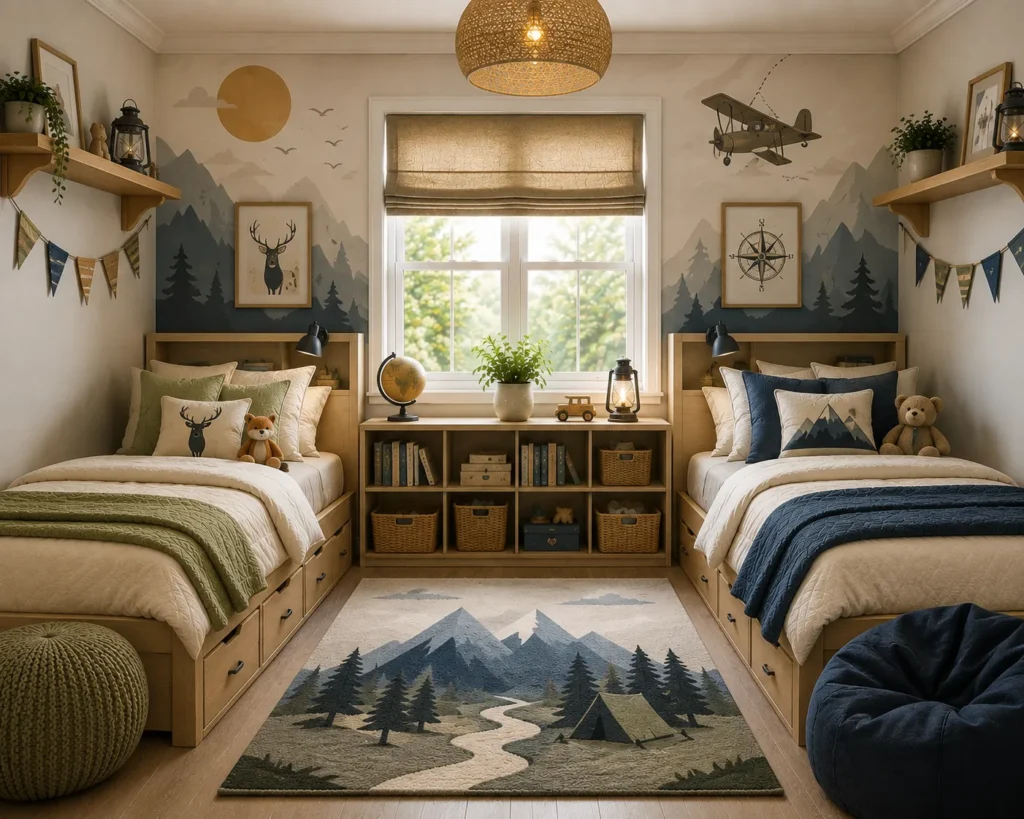
Instead of designing two completely different sides, choose one theme that both children can enjoy. Nature, animals, space, travel, ocean, clouds, or adventure themes can work beautifully.
For example, an adventure-themed bedroom could combine maps, mountains, stars, airplanes, animals, and travel-inspired artwork.
Complete the theme with:
- Coordinated wall art
- Neutral furniture
- Themed bedding
- Soft rugs
- Decorative shelves
- Personalized accessories
This approach makes the bedroom feel like one beautiful space while still leaving plenty of room for individual preferences.
How to Balance Different Personalities
The best girl and boy shared bedroom design ideas don’t require both children to have exactly the same taste.
Instead, create a common foundation and allow personalization through smaller details.
Shared elements can include:
- Wall color
- Flooring
- Main furniture
- Rug style
- Lighting
- Overall theme
Personal elements can include:
- Bedding
- Artwork
- Cushions
- Books
- Toys
- Decorative accessories
This balance keeps the room cohesive without making it feel identical.
Best Color Combinations for a Shared Bedroom
| Color Combination | Overall Feel |
|---|---|
| Cream + Dusty Pink + Soft Blue | Gentle & cheerful |
| Beige + Sage + Terracotta | Natural & modern |
| White + Navy + Blush | Fresh & stylish |
| Gray + Aqua + Coral | Playful & contemporary |
| Cream + Green + Blue | Calm & nature-inspired |
Small Shared Bedroom Tips
If the bedroom is compact, prioritize function before decoration.
Choose furniture that serves multiple purposes and keep the center of the room open.
Try these ideas:
- Use bunk or loft beds.
- Choose beds with built-in drawers.
- Mount shelves instead of using bulky cabinets.
- Use vertical wall space.
- Choose a compact shared desk.
- Keep large decorative pieces to a minimum.
- Use light colors to visually open the room.
Final Thoughts
The best girl and boy shared bedroom design ideas combine practicality with individuality. Start with a neutral foundation, coordinate the major furniture pieces, and then give each child opportunities to personalize their own area.
Whether you choose matching beds, a space-saving bunk, a playful shared theme, or a neutral pink-and-blue palette, the most important goal is creating a room where both children feel equally represented, comfortable, and at home.