A fence is often treated as a purely practical feature, but it can have just as much impact on your outdoor space as your flower beds, patio furniture, or landscaping. In fact, the color of your fence acts as the backdrop for your entire garden, influencing how plants, pathways, and decorative elements appear. A faded or weathered fence can make even a well-maintained yard feel neglected, while a freshly painted fence instantly creates a polished, welcoming atmosphere.
The good news is that transforming your fence doesn’t require a major renovation or a huge budget. With the right paint color and a little creativity, you can completely refresh your backyard over a weekend. Whether you love modern minimalism, cozy cottage gardens, rustic farmhouse charm, or luxurious outdoor living spaces, there’s a fence painting idea that perfectly suits your style.
In this guide, you’ll discover 21 inspiring fence painting ideas that add personality, improve curb appeal, and help create a beautiful outdoor retreat you’ll enjoy throughout every season.
1. Classic Matte Black Fence
A matte black fence has become one of the most sought-after choices in modern landscape design, and for good reason. Instead of competing with your flowers and greenery, black quietly recedes into the background, allowing vibrant plants to become the stars of the garden. Bright roses, colorful hydrangeas, and lush green shrubs all appear more vivid when placed against a dark backdrop.
This timeless color works beautifully with modern homes, traditional gardens, and even rustic outdoor spaces. Pair it with natural wood furniture, warm string lights, and stone pathways to create a sophisticated outdoor retreat. Contrary to popular belief, black doesn’t necessarily make a small yard feel smaller. In fact, it often creates visual depth, making the boundaries of the garden feel less obvious.
Choose a high-quality exterior paint with UV protection to reduce fading over time. A matte finish offers the most elegant appearance while minimizing glare in bright sunlight.
Expert Tip: White flowers such as roses, hydrangeas, and daisies create stunning contrast against a black fence.

2. Soft Sage Green Fence
If your goal is to create a peaceful, nature-inspired garden, sage green is one of the best fence colors you can choose. Its muted earthy tone blends beautifully with surrounding plants, creating a seamless transition between your fence and landscape.
Sage green complements almost every garden style, from charming cottage gardens filled with lavender to modern outdoor spaces with ornamental grasses. Unlike brighter shades of green, sage feels sophisticated and calming, making your backyard a relaxing place to unwind.
This color pairs wonderfully with wooden planters, natural stone, cream outdoor furniture, and woven accessories. As plants mature throughout the seasons, the fence continues to blend effortlessly into the landscape rather than drawing attention away from it.
Expert Tip: Add white climbing roses or jasmine to create a romantic garden backdrop against sage green fencing.

3. Crisp White Fence
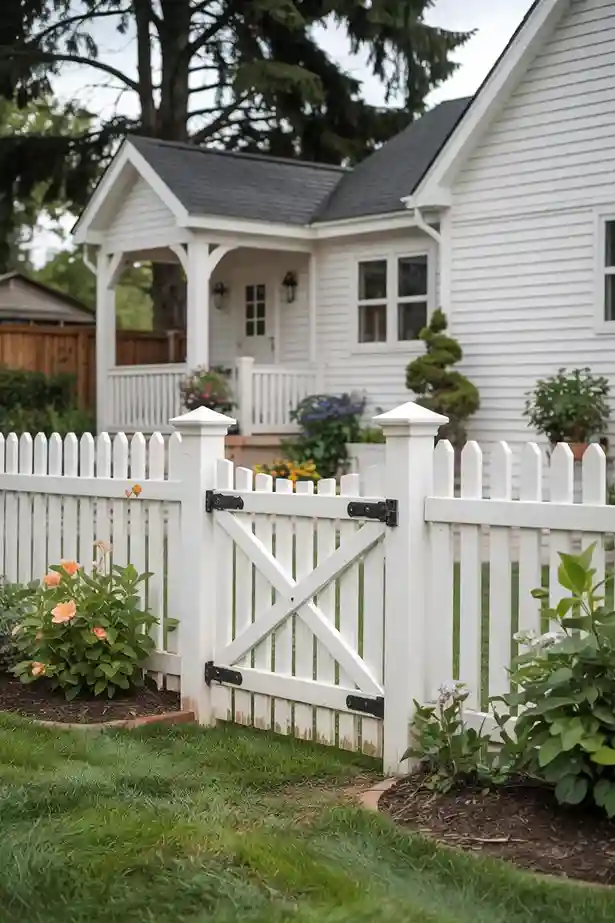
Few fence colors feel as timeless as classic white. Whether you have a traditional picket fence or a modern privacy fence, fresh white paint instantly brightens your outdoor space and creates a clean, welcoming appearance.
White fencing reflects sunlight, helping smaller gardens feel larger and more open. It’s especially popular in farmhouse, coastal, and cottage-style homes where light colors contribute to an airy atmosphere. Colorful flowers and lush greenery also stand out beautifully against a crisp white background.
While white fences require occasional cleaning to maintain their fresh appearance, the bright and elegant look makes the extra maintenance worthwhile.
Expert Tip: Choose exterior paint formulated to resist mildew and dirt for easier long-term maintenance.
4. Deep Charcoal Gray Fence
For homeowners who love contemporary design but find black too dramatic, charcoal gray offers the perfect balance. It delivers modern sophistication while maintaining a softer appearance that complements a wide variety of homes.
Charcoal gray pairs beautifully with concrete patios, black outdoor furniture, metal planters, and silver-green foliage. It also creates an attractive contrast with warm wood decking and natural stone landscaping.
Because charcoal is slightly lighter than black, it absorbs less heat while still providing excellent visual depth for flower beds and shrubs.
Expert Tip: Warm outdoor lighting looks especially inviting against charcoal-colored fencing during the evening.

5. Warm Greige Fence
Greige—a beautiful blend of gray and beige—has become one of the most versatile colors in exterior design. If you’re looking for a fence color that feels modern without being overly bold, greige is an excellent choice. It offers the warmth of beige while maintaining the clean, contemporary appeal of gray, making it suitable for almost any home style.
This neutral shade complements brick, stone, wood, and stucco exteriors equally well. It also provides a soft backdrop for colorful flowers, decorative planters, and outdoor furniture without stealing attention from your landscaping. Whether your backyard features a modern patio or a traditional garden, greige blends effortlessly with its surroundings.
Expert Tip: Pair a greige fence with black outdoor lighting and natural wood furniture for a timeless, upscale look.

6. Rich Navy Blue Fence
Navy blue is a classic color that brings elegance and personality to any outdoor space. Unlike brighter blues, navy feels refined and calming, making it ideal for homeowners who want a statement color that won’t overwhelm the garden.
This deep shade works particularly well with white flowers, silver foliage, and light-colored stone pathways. During the day, navy appears rich and dramatic, while in the evening, warm garden lighting creates a cozy, inviting atmosphere against the dark backdrop.
Expert Tip: Brass or matte black outdoor fixtures beautifully complement navy blue fencing.

7. Natural Cedar Stain
Sometimes the beauty of a fence lies in its natural wood grain rather than a painted finish. A cedar stain enhances the texture and warmth of the wood while protecting it from moisture, sunlight, and everyday weathering.
Natural wood finishes create a timeless look that suits rustic, farmhouse, Scandinavian, and woodland-inspired gardens. As plants mature around the fence, the warm wood tones blend seamlessly into the landscape, creating an inviting outdoor retreat.
Expert Tip: Reapply a protective wood stain every few years to maintain the fence’s rich natural color.

8. Forest Green Fence
Forest green creates a luxurious backdrop inspired by nature. Its rich, earthy tone allows fences to blend into mature landscapes while adding depth and sophistication to the garden.
This color works especially well in gardens filled with shrubs, evergreen trees, climbing plants, and ornamental grasses. Rather than drawing attention to the fence itself, forest green allows colorful flowers to become the focal point.
Expert Tip: Combine forest green fencing with natural stone borders for a classic English garden look.

9. Warm Terracotta Fence
Terracotta introduces warmth and Mediterranean charm into your outdoor space. Its earthy orange-brown tones instantly make patios and gardens feel cozy and welcoming.
This color pairs beautifully with clay pots, olive trees, lavender, succulents, and gravel pathways. It’s an excellent option for homeowners who enjoy outdoor entertaining because it creates a warm, relaxed atmosphere throughout every season.
Expert Tip: Use cream-colored outdoor cushions to balance the richness of terracotta.

10. Olive Green Fence
Olive green offers a slightly deeper, more sophisticated alternative to sage. It feels grounded and natural while complementing both traditional and contemporary landscaping.
The muted green shade blends effortlessly with surrounding plants, making fences feel like part of the landscape instead of a separate structure. Olive also looks beautiful alongside natural wood furniture and woven garden accessories.
Expert Tip: Olive green works exceptionally well in gardens featuring ornamental grasses and native plants.
11. Dusty Blue Fence
Dusty blue brings a peaceful coastal feel to any backyard. Unlike bright blues, this muted shade feels calming and sophisticated while adding subtle color to outdoor spaces.
It’s especially attractive when paired with white pergolas, light wood decking, and woven outdoor furniture. Dusty blue also complements hydrangeas, lavender, and ornamental grasses, creating a relaxing cottage-style garden.
Expert Tip: Add white lanterns and soft outdoor lighting for a charming coastal-inspired look.

12. Chocolate Brown Fence
A rich chocolate brown fence creates warmth while preserving a natural appearance. Unlike lighter wood finishes, dark brown provides more contrast with greenery without feeling overly dramatic.
This color works well with log homes, rustic cabins, and traditional gardens. It also helps conceal dirt and weathering better than lighter fence colors, making it a practical choice for busy homeowners.
Expert Tip: Incorporate cream or beige outdoor furniture to create beautiful contrast.
13. Color Block Fence Design
Color blocking is a creative way to transform an ordinary fence into a unique design feature. Instead of painting every panel the same color, alternate complementary shades for added visual interest.
Soft combinations such as sage and cream create a subtle designer look, while black and natural wood produce a bold contemporary statement. This approach works particularly well in modern gardens where clean lines are emphasized.
Expert Tip: Limit your palette to two or three coordinating colors to keep the design cohesive.
14. Ombre Gradient Fence
An ombre fence gradually transitions from one shade to another, creating a striking artistic effect. This technique is especially effective on horizontal slat fences where each board can feature a slightly different tone.
Choose shades within the same color family, such as deep navy fading into sky blue or charcoal blending into soft gray. The gradual transition creates movement and adds personality to the garden.
Expert Tip: Practice blending colors on spare boards before painting the entire fence.
15. Geometric Painted Panels
Geometric patterns instantly give fences a custom-designed appearance. Triangles, arches, circles, and modern line art can all be painted onto selected panels to create eye-catching focal points.
Rather than covering the entire fence, many homeowners choose one section behind a seating area or outdoor dining space. This creates visual interest without overwhelming the garden.
Expert Tip: Use painter’s tape for crisp, professional-looking edges.
16. Botanical Mural Fence
Turn your fence into an outdoor art gallery by painting botanical illustrations or oversized leaves. This creative approach adds personality while complementing surrounding plants.
Botanical murals work beautifully behind outdoor lounges, patios, or garden seating areas where they become an attractive focal point. Soft greens, creams, and earthy tones create a timeless look.
Expert Tip: Seal painted artwork with a clear UV-resistant exterior topcoat.
17. Chalkboard Fence Panel
A chalkboard section adds both creativity and functionality to your backyard. Children can draw, families can leave messages, and hosts can display menus during outdoor gatherings.
Rather than painting the entire fence, dedicate one or two panels to chalkboard paint. This playful feature works particularly well near patios, outdoor kitchens, or children’s play areas.
Expert Tip: Use weather-resistant chalkboard paint specifically designed for exterior use.
18. Soft Taupe Fence
Taupe is another versatile neutral that creates a sophisticated outdoor backdrop. Its balanced mix of brown and gray complements almost every landscaping style.
Taupe allows flowers, shrubs, and decorative garden features to stand out naturally while maintaining an elegant appearance throughout the year. It’s an excellent choice for homeowners seeking timeless style.
Expert Tip: Pair taupe fencing with black planters and warm wood accents.
19. Two-Tone Fence Design
Painting fence posts one color and panels another creates depth and architectural interest. This simple technique gives even basic fencing a custom-built appearance.
Popular combinations include black with cedar, charcoal with oak stain, or white with gray. The contrasting colors highlight the fence’s structure while adding dimension to your backyard.
Expert Tip: Keep one color neutral to ensure the overall design remains balanced.
20. Soft Cream Fence
Cream offers all the brightness of white but with a warmer, softer appearance. It creates a welcoming atmosphere and complements traditional, farmhouse, and cottage-style homes beautifully.
Unlike pure white, cream hides minor dust and dirt more effectively while still making smaller gardens appear brighter and more spacious.
Expert Tip: Pair cream fencing with climbing roses or flowering vines for timeless curb appeal.
21. Vertical Stripe Fence
Painting alternating fence boards in slightly different shades creates subtle texture and makes the fence appear taller. This clever visual trick is ideal for compact gardens where you want to add the illusion of height.
Neutral color combinations such as beige and taupe or gray and greige create a sophisticated finish, while bolder combinations add a playful modern touch. The result is eye-catching without being overwhelming.
Expert Tip: Use painter’s tape and a high-quality roller to achieve clean, consistent stripes with minimal effort.
Final Thoughts
Painting your fence is one of the easiest and most affordable ways to refresh your outdoor living space. The right color doesn’t just improve the appearance of the fence itself—it enhances your flowers, landscaping, patio, and even the overall character of your home. Whether you prefer a bold matte black statement, the natural elegance of sage green, or the timeless beauty of crisp white, choosing a thoughtful color can dramatically transform your backyard.
Before starting your project, invest time in preparing the fence properly by cleaning, repairing, and priming the surface. High-quality exterior paint and proper preparation will help your finish last for years while protecting the wood from weather and moisture.
No matter the size of your garden, these fence painting ideas prove that a simple weekend project can make a remarkable difference. Choose a color that reflects your personal style, complements your landscaping, and creates an outdoor space you’ll love spending time in every season.