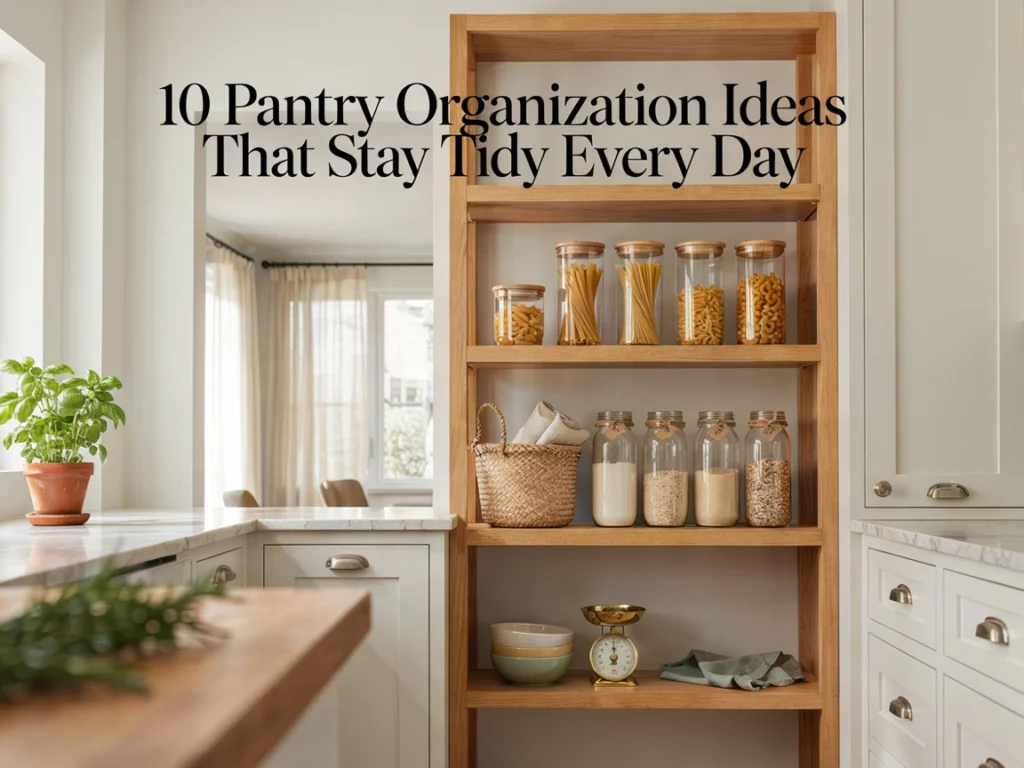
Keeping your pantry organized isn’t just about creating a picture-perfect space it makes meal prep faster, reduces food waste, and helps you save money. The best pantry organization ideas focus on simple systems that are easy to maintain, even in busy households. Whether you have a spacious walk-in pantry or a compact cabinet, these practical tips will help you create a clutter-free kitchen that stays organized all year.
The best pantry organization ideas include decluttering regularly, grouping food into categories, using clear airtight containers, labeling shelves, adding vertical storage, organizing by pantry zones, rotating food with the FIFO method, and doing a quick weekly reset. These habits keep your pantry neat, functional, and easy to maintain
What Are Pantry Organization Ideas?
Pantry organization ideas are storage strategies and layout techniques that help you maximize space, improve accessibility, and keep food items neatly arranged. They combine smart storage products, organized zones, and consistent maintenance routines to create a pantry that’s both practical and visually appealing.
Why Pantry Organization Matters
A well-organized pantry is more than just aesthetically pleasing. It helps you find ingredients quickly, prevents duplicate grocery purchases, and reduces expired food.
Professional kitchen designers recommend organizing a pantry around daily habits, not just appearance. When every item has a designated place, maintaining your pantry becomes effortless rather than overwhelming.
Benefits include:
- Faster meal preparation
- Less food waste
- Better inventory management
- More usable storage space
- Reduced grocery spending
- Cleaner kitchen environment
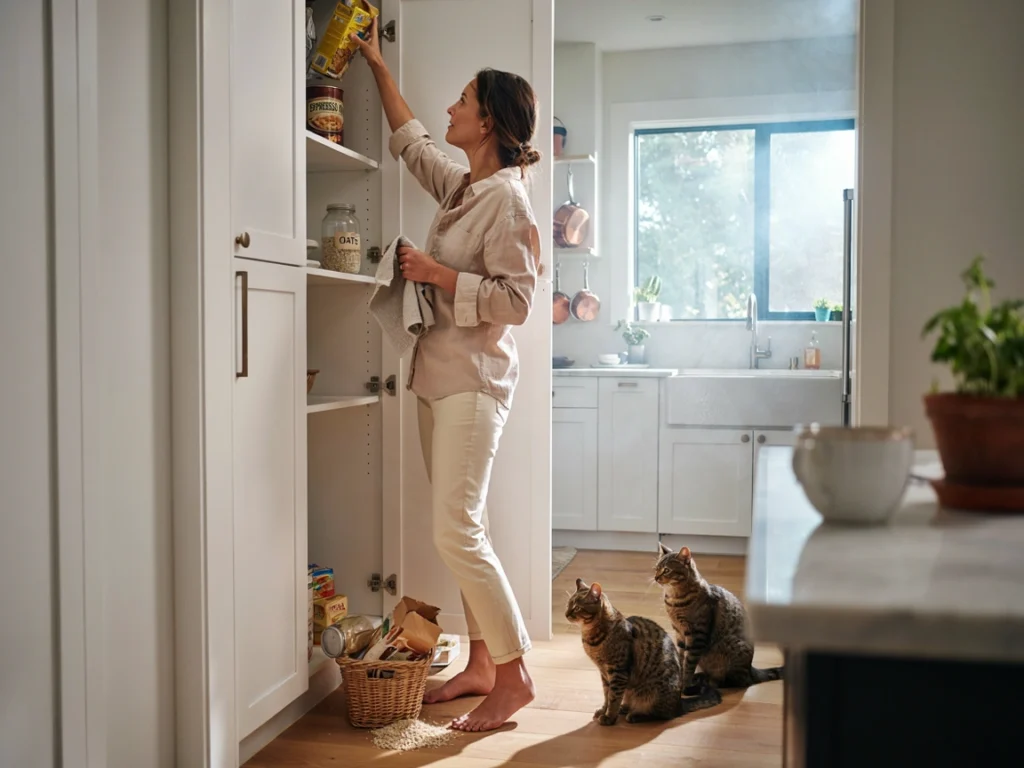
1. Start With a Complete Pantry Reset
Before buying storage containers or organizers, empty every shelf.
Sort everything into four groups:
- Keep
- Donate
- Expired
- Relocate
Wipe down shelves, vacuum crumbs, and check expiration dates. Starting with a clean slate makes it much easier to create a system that lasts.
Expert Insight: Interior organizers often recommend performing a full pantry reset every six months to prevent clutter from building up again.
2. Create Pantry Zones
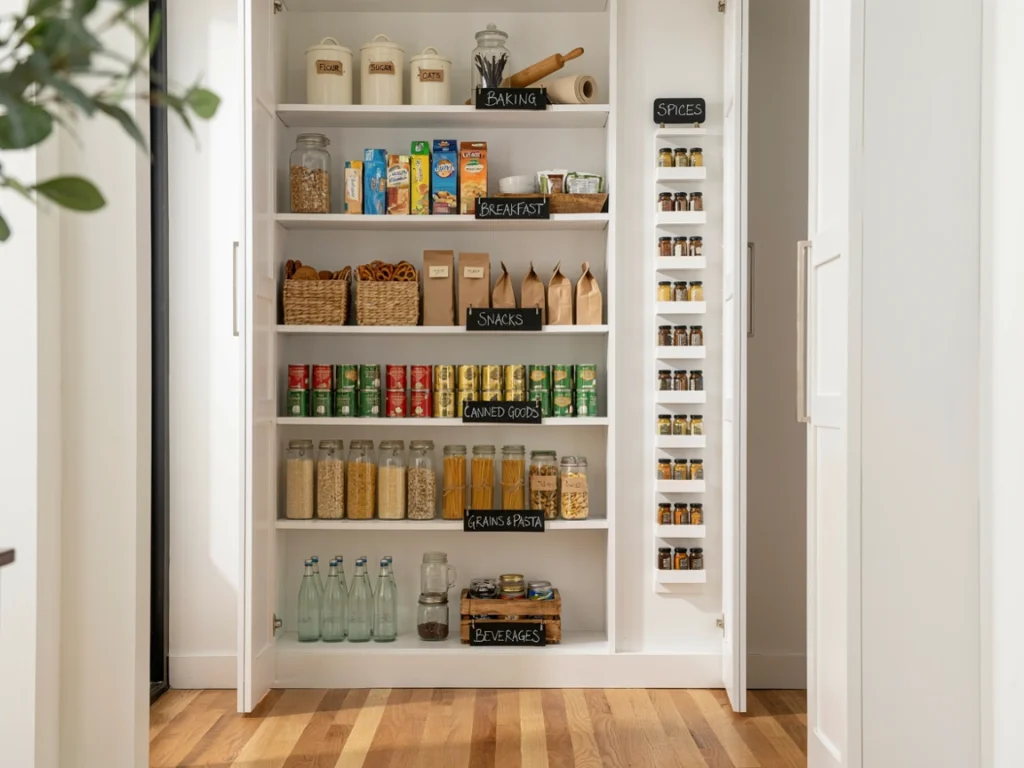
Instead of placing food wherever it fits, organize similar items together.
Common pantry zones include:
- Baking supplies
- Breakfast foods
- Snacks
- Pasta and grains
- Canned goods
- Spices
- Oils and vinegars
- Beverages
Grouping by category makes shopping, cooking, and restocking much faster because you’ll always know exactly where everything belongs.
3. Store Dry Goods in Clear Airtight Containers
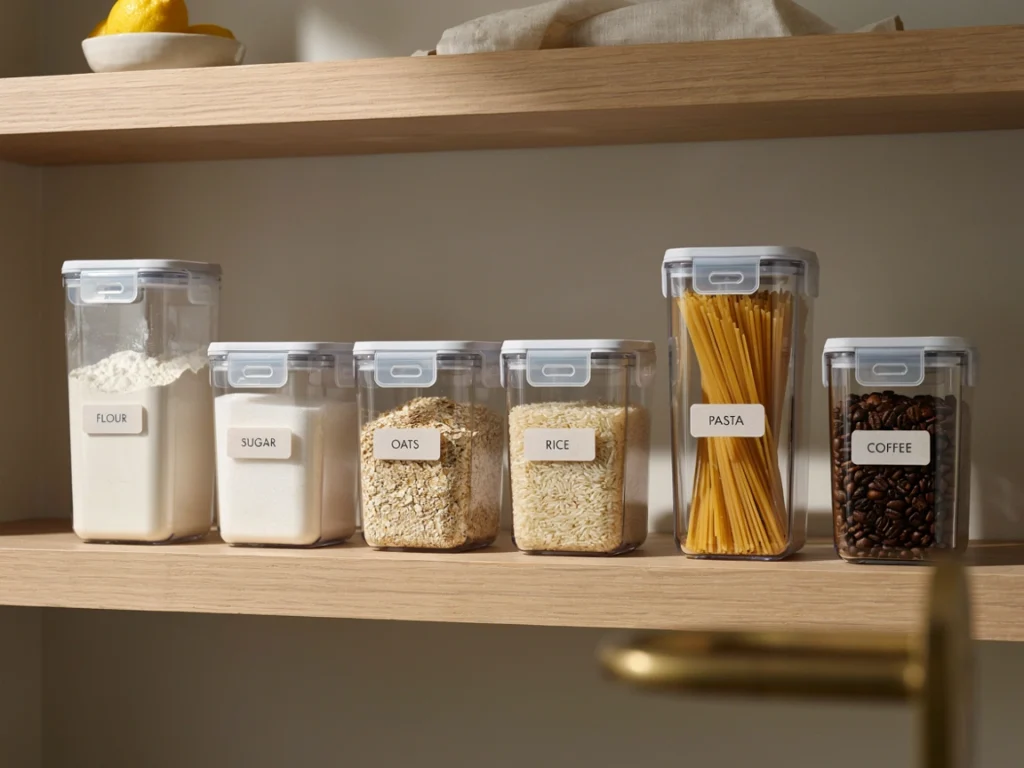
One of the easiest pantry organization ideas is replacing bulky packaging with matching airtight containers.
Ideal foods for decanting include:
- Flour
- Rice
- Sugar
- Oats
- Pasta
- Cereal
- Coffee
- Beans
Clear containers allow you to see inventory at a glance while keeping food fresher for longer. Square and rectangular containers also maximize shelf space better than round ones.
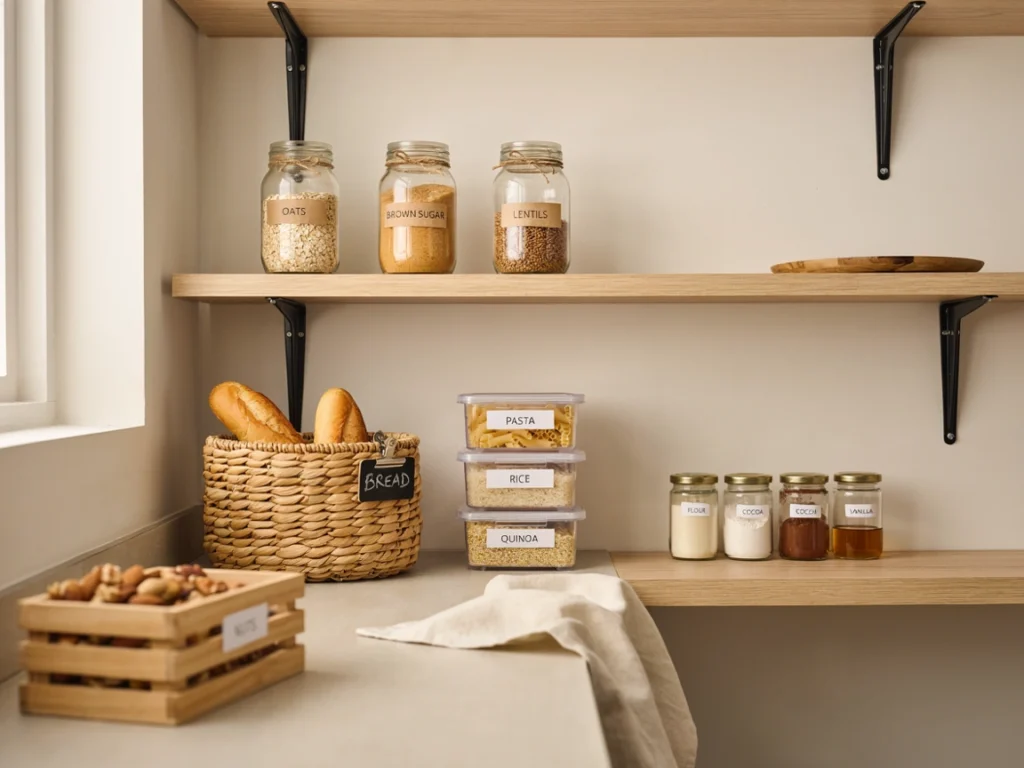
4. Label Everything
Even if you think you’ll remember where everything goes, labels keep your organization system consistent.
Label:
- Containers
- Baskets
- Shelves
- Snack bins
- Baking ingredients
Simple printed labels or waterproof stickers work well, and they make it easier for every family member to return items to the correct place.
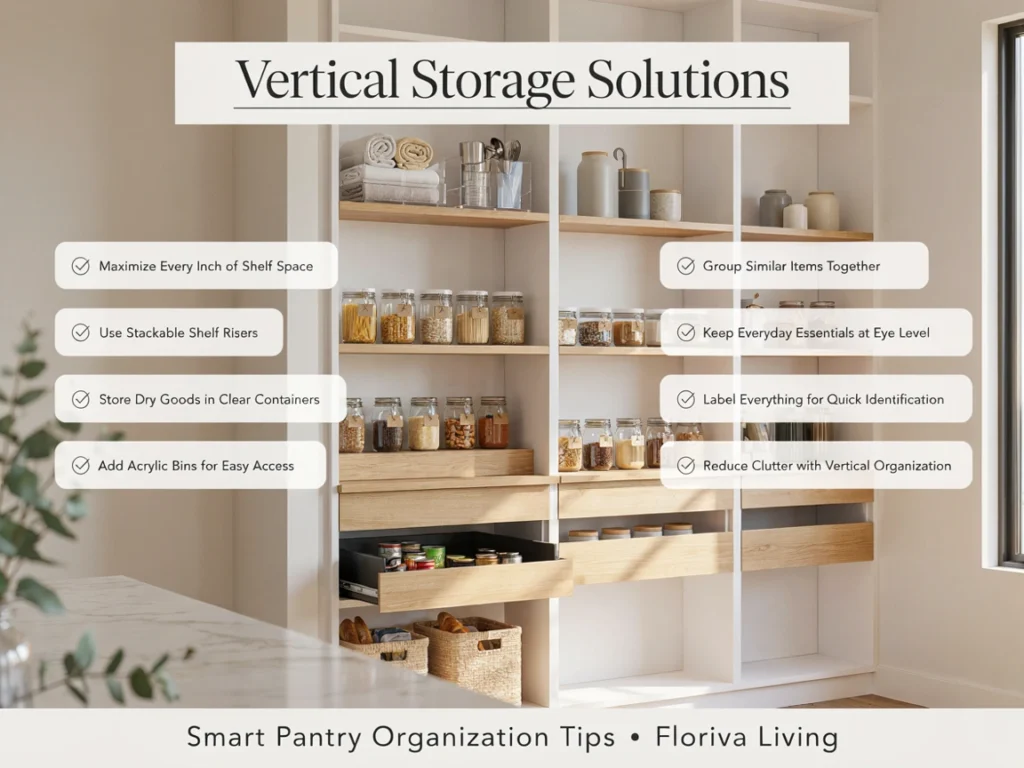
5. Make the Most of Vertical Space
Many pantry shelves have unused space above shorter items.
Increase storage by adding:
- Shelf risers
- Stackable bins
- Wire shelves
- Tiered organizers
Vertical storage lets you double your usable shelf space without renovating your pantry.
This solution works especially well for canned foods, spices, and boxed meals.
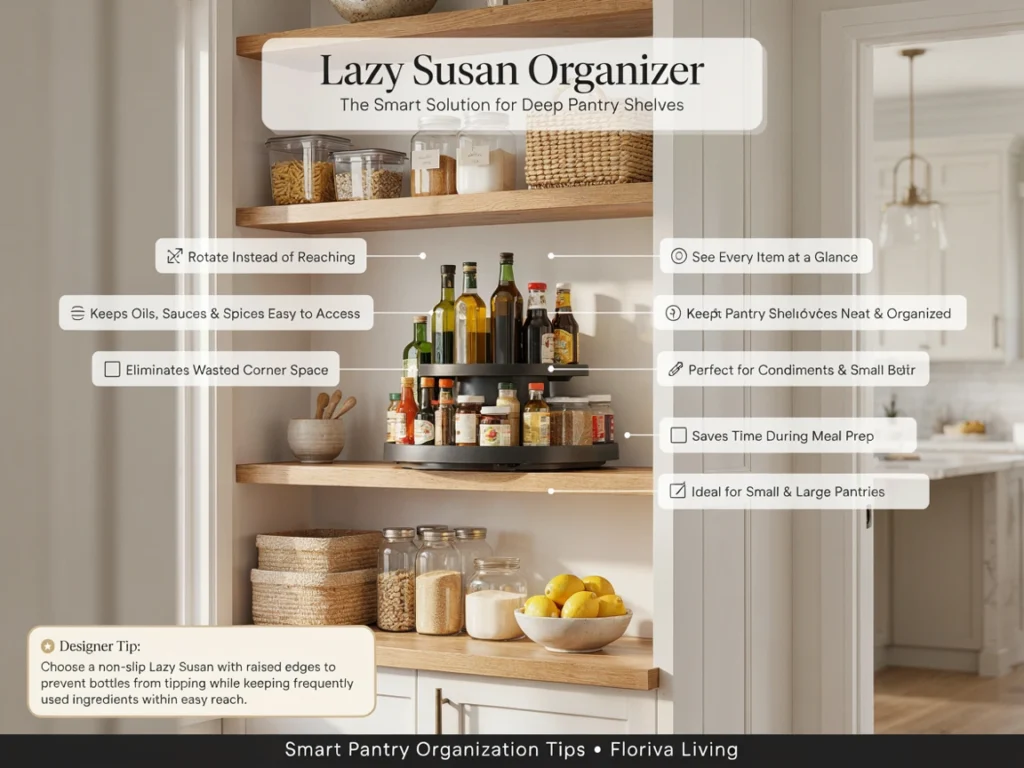
6. Use Lazy Susans for Deep Shelves
Deep pantry shelves often become cluttered because items disappear behind one another.
A rotating Lazy Susan solves this problem by bringing everything within easy reach.
They’re perfect for storing:
- Cooking oils
- Vinegars
- Sauces
- Condiments
- Small jars
- Baking extracts
Instead of digging through crowded shelves, simply rotate the organizer to find what you need.
7. Create a Grab-and-Go Snack Station
Busy mornings become much easier when snacks are organized into dedicated baskets.
Separate bins for:
- Granola bars
- Crackers
- Fruit snacks
- Nuts
- Protein bars
- Lunchbox items
Children can independently grab snacks without pulling everything else off the shelf, keeping your pantry much tidier throughout the week.
8. Don’t Forget the Pantry Door
The inside of your pantry door is valuable storage space that’s often overlooked.
Install an over-the-door organizer for:
- Spice packets
- Seasoning mixes
- Foil
- Plastic wrap
- Snack pouches
- Small bottles
Using the door keeps frequently used items visible while freeing shelf space for larger pantry essentials.
9. Follow the FIFO Method
Professional kitchens use the First In, First Out (FIFO) method to reduce food waste.
The system is simple:
- Place new groceries behind older ones.
- Move older products to the front.
- Use older items first.
This habit prevents forgotten food from expiring at the back of shelves while helping you manage pantry inventory more efficiently.
10. Schedule a Weekly Five-Minute Reset
Even the best organization system requires a little maintenance.
Set aside five minutes once a week to:
- Return misplaced items
- Throw away empty packaging
- Wipe shelves if needed
- Check low supplies
- Straighten containers
A quick weekly reset prevents small messes from turning into overwhelming clutter.
Consistency—not perfection—is what keeps your pantry organized long term.
Pantry Storage Solutions Comparison
| Storage Solution | Best For | Advantages | Considerations |
|---|---|---|---|
| Clear Airtight Containers | Dry goods | Freshness, visibility, stackable | Initial investment |
| Woven Baskets | Snacks, produce | Attractive and portable | Labels recommended |
| Shelf Risers | Cans and jars | Maximizes vertical space | Best on deeper shelves |
| Lazy Susan | Oils, sauces, spices | Easy access | Works best in corners |
| Door Organizer | Small packets | Uses unused space | Weight limits apply |
| Stackable Bins | Boxed foods | Flexible storage | Measure shelf height first |
Expert Tips for a Pantry That Stays Organized
- Measure your shelves before buying storage containers.
- Buy identical container sizes for a cleaner look.
- Keep frequently used items at eye level.
- Store heavier products on lower shelves.
- Use clear bins whenever possible for better visibility.
- Label expiration dates on homemade pantry staples.
- Keep a small inventory list to avoid duplicate purchases.
- Review your pantry before every grocery shopping trip.
Pros & Cons of Pantry Organization Systems
| Pros | Cons |
|---|---|
| Saves time during cooking | Initial setup takes time |
| Reduces food waste | Quality organizers can be expensive |
| Makes grocery shopping easier | Requires occasional maintenance |
| Maximizes storage space | Labels may need updating |
| Creates a cleaner kitchen | Systems must be followed consistently |
Common Pantry Organization Mistakes
Avoid these common mistakes if you want your pantry to stay organized:
Buying Organizers Before Decluttering
Always sort through existing items before purchasing storage products.
Ignoring Expiration Dates
Regularly check food labels to reduce waste and keep your pantry safe.
Mixing Categories
Keeping baking supplies beside snacks or canned goods creates unnecessary confusion.
Overfilling Shelves
Leave enough room to easily remove and replace items.
Skipping Labels
Without labels, even the most organized pantry gradually loses structure.
Forgetting Maintenance
A five-minute weekly reset is far easier than spending hours reorganizing every few months.
Pantry Organization Checklist
Use this checklist when organizing your pantry:
- Empty every shelf
- Discard expired products
- Wipe shelves clean
- Group food into categories
- Use airtight containers
- Label containers and shelves
- Install shelf risers where needed
- Add baskets for snacks
- Use Lazy Susans for deep corners
- Organize the pantry door
- Rotate food using FIFO
- Schedule a weekly tidy-up
Studies on household food management suggest that better pantry organization can help reduce food waste by making ingredients easier to see and use before they expire. Simple habits like labeling, rotating stock, and grouping similar items also make grocery shopping more efficient.
Conclusion
Creating a tidy pantry doesn’t require an expensive makeover or a complete kitchen renovation. The most effective pantry organization ideas are built around practical habits that fit your daily routine. Start by decluttering, organize food into easy-to-find zones, use clear containers, and maintain your system with a quick weekly reset.
Remember, a well-organized pantry is designed to make everyday life easier—not just look beautiful. Even implementing two or three of these ideas can transform how you cook, shop, and manage your kitchen.
Explore More on Floriva Living
Looking for more ways to create a beautiful and functional home? Explore Floriva Living for expert home organization tips, stylish kitchen storage ideas, interior design inspiration, and practical solutions to help every room stay organized and inviting. Your dream home starts with smart, simple improvements—one space at a time.